Why Your CRM Might Be Losing You Leads, Not Saving Them
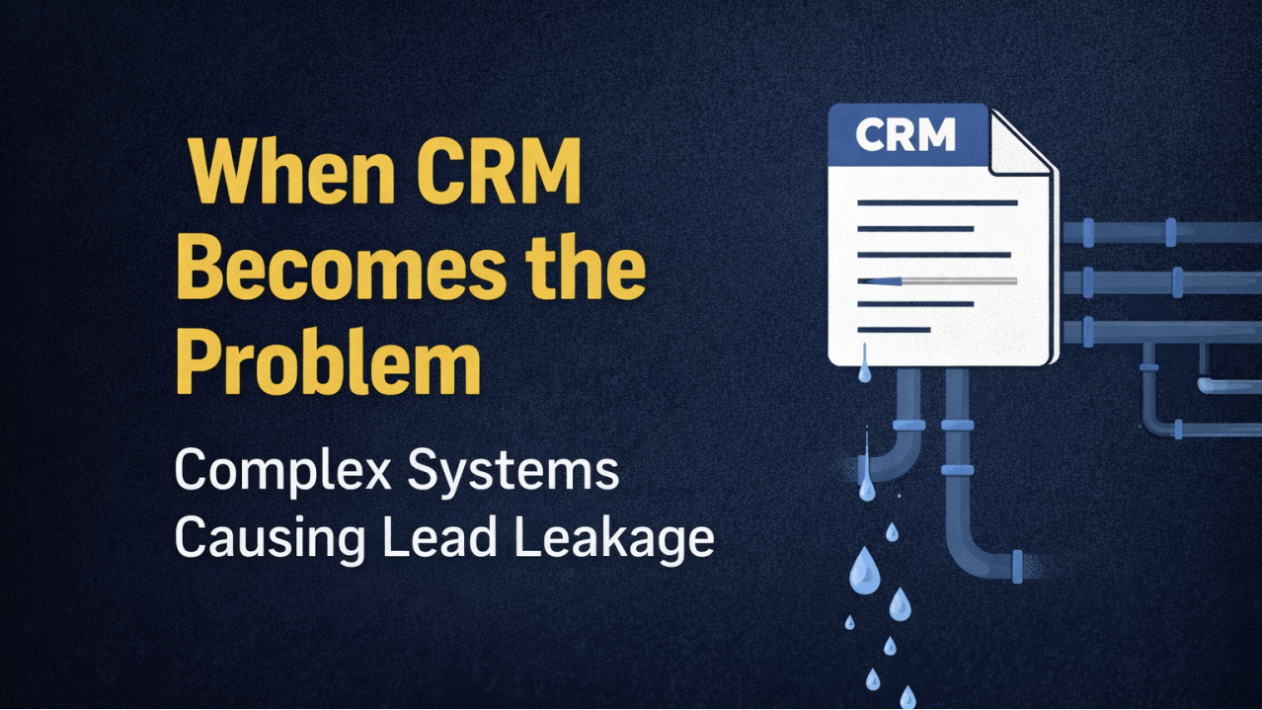
A CRM exists for one reason. To make sure a lead never quietly disappears. So it's a strange twist that so many businesses install one and then start losing leads anyway, sometimes more than before. The tool wasn't broken. It was just too complicated for anyone to actually use.
The CRM you never use is worse than no CRM at all
Done right, a CRM genuinely works. Businesses that use one properly see meaningfully better customer retention and stronger sales outcomes. But a large share of CRM setups, across small businesses and large ones alike, never actually deliver that, mostly because teams quietly stop using them the way they were meant to be used.
That's the real story behind most CRM failures. Not bad software. Bad fit for how the team actually works day to day.
Where it goes wrong
The problem is almost never the CRM platform itself. It's how it gets set up and used.
Too many fields to fill in. Every lead needs five, ten, sometimes fifteen fields updated. After a few busy days, staff stop bothering, and once a CRM has stale data, nobody trusts it enough to keep using it.
Built for reports, not for the people doing the work. Owners want dashboards. The person actually following up with leads just wants to know who to call next. When those two needs aren't both served, the team quietly moves back to WhatsApp chats and notebooks, and the CRM becomes an extra step nobody has time for.
Too many custom features. Custom fields, custom stages, custom automations for every possible scenario. It sounds thorough. In practice it makes the system harder to learn and easier to abandon.
What actually happens when this breaks down
Leads sit un-updated. Follow-ups get missed. Nobody can say with confidence how many real, active leads are actually in the pipeline right now. So the team goes back to what feels faster, a WhatsApp thread or a notebook, even though that's exactly the chaos the CRM was supposed to fix in the first place.
The fix is not more features, it's fewer
The best CRM setups aren't the most advanced ones. They're the ones a team actually opens every day without being told to.
- Capture leads automatically. No manual copy-pasting from a form into a spreadsheet, ever.
- Trigger a simple follow-up. The moment a lead comes in, something happens automatically, a WhatsApp message, a reminder, without anyone having to remember.
- Show a clear pipeline at a glance. Who's new, who's warm, who's gone cold, visible in seconds, not buried in a report.
If updating the CRM takes longer than just sending a WhatsApp message, the CRM will eventually lose, every time.
The real question to ask before setting one up
Not "what features do we need." Just one question. Will the team actually want to use this tomorrow morning, without being reminded? If the honest answer is no, the CRM needs to get simpler, not more advanced.
Leads slipping through the cracks?
I build lead systems that get used, not ones that get abandoned in month two.
show me the other way